

Can Buy Ielts Certificate
FollowOverview
-
Founded Date March 8, 2009
-
Sectors Publishing
-
Posted Jobs 0
-
Viewed 14
Company Description
The 10 Scariest Things About IELTS English Certificate
Understanding the IELTS English Certificate: A Comprehensive Guide
The International English Language Testing System, typically known as IELTS, is a globally acknowledged English language proficiency test designed to evaluate the language skills of non-native English speakers. It is one of the most commonly accepted English language tests for greater education, migration, and expert purposes in nations where English is the main language. This article dives into the complexities of the IELTS, providing an in-depth introduction of the test format, scoring, preparation techniques, and often asked questions.
What is IELTS?
IELTS is a standardized test that assesses candidates’ capabilities in listening, reading, composing, and speaking. It is collectively handled by the British Council, IDP: IELTS Australia, and Cambridge Assessment English. The test is readily available in 2 formats: Academic and General Training. The Academic format appropriates for people who want to study at the undergraduate or postgraduate level in an English-speaking nation, while the General Training format is targeted at those who are obtaining work experience, training programs, or immigration.
Test Format
-
Listening (40 minutes)
- The Listening area consists of four audio recordings, each followed by a set of concerns. The recordings differ in context, varying from daily conversations to academic lectures.
- Test takers are required to address 40 concerns, which can consist of multiple-choice, matching, and short-answer formats.
-
Checking out (60 minutes)
- The Reading area consists of 3 passages and 40 concerns. The passages are drawn from books, magazines, newspapers, and other sources.
- For the Academic format, the passages are more complex and academic in nature, while the General Training format consists of passages that are more useful and relevant to everyday life.
-
Writing (60 minutes)
- The Writing area comprises 2 jobs. In Task 1 of the Academic format, prospects must describe a graph, table, chart, or diagram. In the General Training format, Task 1 includes composing a letter.
- Task 2 requires candidates to write an essay in response to a perspective, argument, or issue.
-
Speaking (11-14 minutes)
- The Speaking area is an in person interview with an inspector. It is divided into three parts: an intro and interview, a long turn where the prospect discusses an offered topic, and a discussion.
- This area aims to assess candidates’ capability to communicate successfully in a range of contexts.
Scoring System
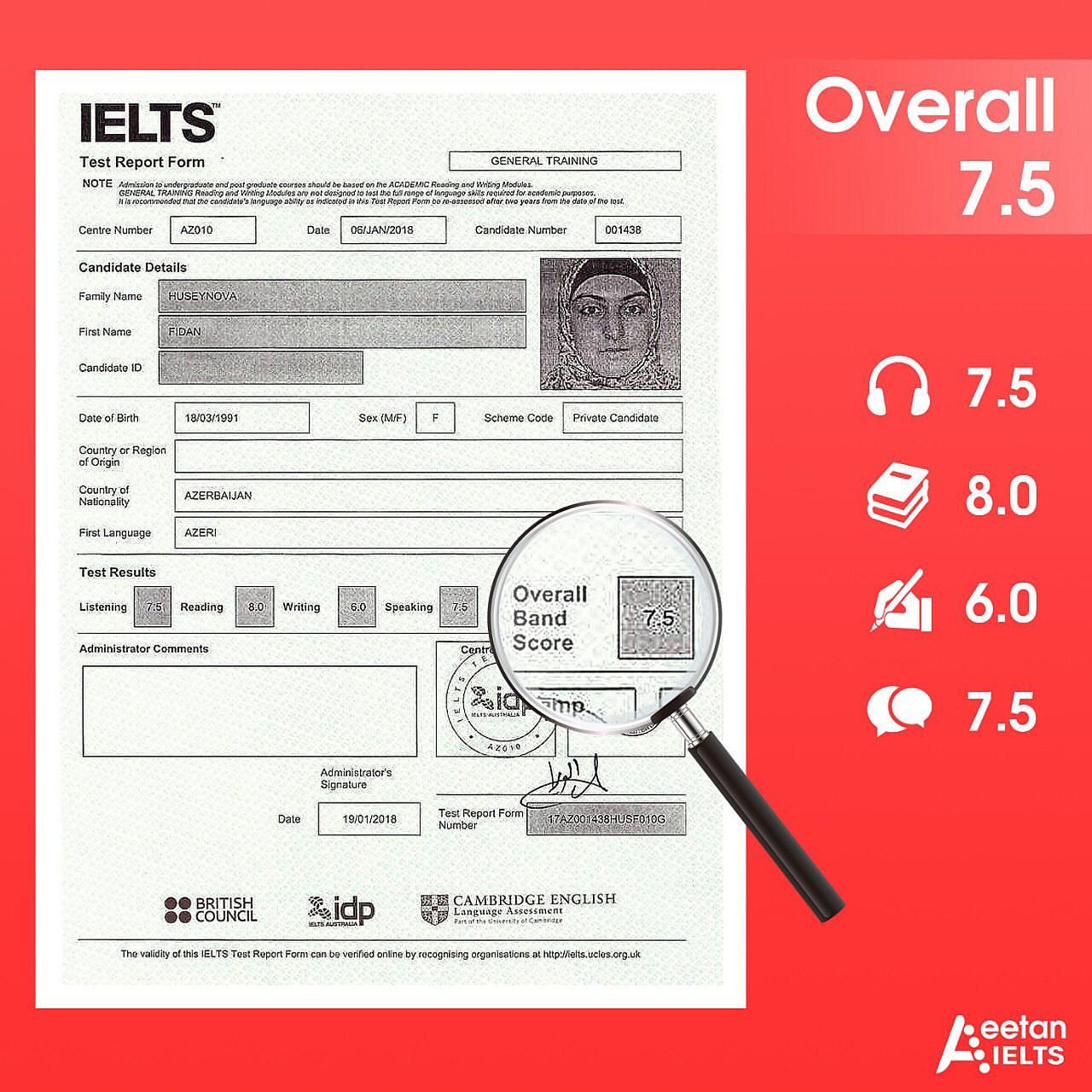
IELTS ratings are reported on a scale from 0 to 9, with 9 being the highest. Each section of the test (Listening, Reading, Writing, and Speaking) is scored individually, and the general band score is the average of these 4 ratings. The scoring is based upon the following requirements:
- Listening and Reading: Correct responses are given one mark each, and the total score is transformed to a band score.
- Writing: Tasks are evaluated based upon task achievement/response, coherence and cohesion, lexical resource, and grammatical range and precision.
- Speaking: Performance is assessed based upon fluency and coherence, lexical resource, grammatical variety and precision, and pronunciation.
Test Preparation
-
Comprehend the Test Format
- Before beginning preparation, it is crucial to comprehend the format and structure of the IELTS. This consists of acquainting oneself with the kinds of questions and the time designated for each section.
-
Practice with Sample Tests
- Make use of main IELTS practice materials and sample tests to get a feel for the kinds of concerns and the level of problem. This can assist recognize areas that require improvement.
-
Establish Language Skills
- Improve your reading, writing, listening, and speaking abilities through regular practice. Read a variety of texts, write essays and letters, listen to English audio, and practice speaking with native speakers or through language exchange programs.
-
Time Management
- Time management is type in the IELTS. Practice finishing jobs within the allocated time to avoid hurrying and making reckless mistakes.
-
Seek Professional Help
- Consider registering in a preparation course or dealing with a private tutor who can supply personalized assistance and feedback.
Test Day Tips
-
Show up Early
- Come to the test center well before the scheduled time to prevent any last-minute stress.
-
Bring Required Documents
- Guarantee you have all the necessary files, including your valid identification and verification of test registration.
-
Stay Calm and Focused
- Manage your tension levels by taking deep breaths and staying focused throughout the test. Remember that the IELTS is just one action in your journey.
-
Listen Carefully
- In the Listening section, pay attention to the audio and make notes if necessary. Do not get sidetracked or stick around on one concern; proceed to the next if you are uncertain.
-
Read Instructions Thoroughly
- Check out the directions for each area thoroughly to guarantee you understand what is required. This can assist avoid unneeded mistakes.
-
Answer All Questions
- Even if you are not sure of an answer, make an educated guess. There is no charge for wrong answers, so it is better to attempt every concern.
Often Asked Questions (FAQs)
Q: What is the difference in between the Academic and General Training formats?
- A: The Academic format is developed for people who want to study or train in an English-speaking environment, while the General Training format is intended at those who are getting work experience or migration. The Reading and Writing sections differ substantially in between the two formats, with the Academic format including more intricate texts and jobs.
Q: How long are the test results valid?
- A: IELTS test outcomes are valid for 2 years. However, some organizations and organizations may have their own credibility durations, so it is crucial to consult them straight.
Q: Can I retake the IELTS if I am not satisfied with my score?
- A: Yes, you can retake the IELTS as lot of times as you require. However, there is a minimum 21-day waiting period in between test attempts.
Q: How do I register for the IELTS?
- A: You can register for the IELTS online through the official Ielts English Certificate site or by calling your regional test center. You will require to offer personal details, choose a test date and place, and pay the registration charge.
Q: Are there any particular requirements for the Speaking test?
- A: During the Speaking test, prospects are examined on their ability to interact efficiently in English. The test is conducted in an in person interview format, and there are no particular requirements aside from being able to speak fluently and plainly. Practice speaking in English routinely to construct confidence.
The IELTS is a comprehensive and strenuous test that examines a candidate’s efficiency in the English language. Whether you are preparing to study abroad, seek employment in an English-speaking nation, or make an application for migration, the IELTS can be a valuable tool in showing your language skills. By understanding the test format, preparing properly, and following the suggestions supplied, you can increase your chances of achieving a high score and reaching your objectives.
Extra Resources
- Authorities IELTS Website: ielts.org
- IELTS Practice Materials: ielts.org/practice
- Test Centers and Dates: ielts.org/locations
By leveraging these resources and following a structured preparation plan, you can with confidence approach the IELTS and accomplish the wanted results.